How to Choose the Best Metal Works Machine?

Choosing the right metal works machine is rarely a simple matter of comparing price tags. A workshop may need a press brake, laser cutter, milling machine, or integrated system, depending on its materials, tolerances, production volume, and available floor space. The best choice must match real work, not an impressive brochure.

Dr. David A. Dornfeld, professor emeritus at the University of California, Berkeley, wrote, “Sustainable manufacturing is the creation of manufactured products through economically-sound processes that minimize negative environmental impacts while conserving energy and natural resources.” His statement offers a useful test for every metal works machine. Can it reduce waste? Does it use energy responsibly? Will it remain productive after several years of demanding operation?

Look closely at cutting accuracy, spindle speed, motor power, control software, tooling access, and maintenance requirements. Also inspect the machine in person, if possible. A polished demonstration can hide awkward loading, slow setup, or difficult cleaning. Ask operators about noise, vibration, training time, and service response. These details matter.

Budget still matters.

However, the cheapest machine may become the most expensive choice. Downtime, rejected parts, and unavailable components can quietly damage a business. A high-end machine may also be excessive for a small workshop with limited orders. This is where judgment becomes imperfect. Forecasts change, operators make mistakes, and specifications do not reveal everything. A careful buyer should compare measurable performance with hands-on experience before selecting a metal works machine that supports reliable, safe, and profitable production.
How to Choose the Best Metal Works Machine?

Define Your Metalworking Goals and Material Requirements

How to Choose the Best Metal Works Machine?

Define Your Metalworking Goals and Material Requirements

Choosing a metalworking machine starts with a clear description of the work. Will you cut, bend, drill, weld, or form metal? Record the part dimensions, required tolerances, production volume, and desired finish. A machine for occasional repair work may not suit daily production. Start with the material.

Steel, aluminum, stainless steel, and copper behave differently during processing. Their thickness, hardness, heat response, and tendency to deform affect machine selection. For example, thin aluminum may need controlled force and sharp tooling. Thick steel often demands greater power, rigidity, and stable clamping. Measure twice. A small error in thickness can lead to poor results, damaged tools, or unsafe operation.

I once focused too much on maximum capacity and overlooked workspace limits. The machine fit the specification, but not the room. Leave space for loading, maintenance, ventilation, and material movement. Check electrical requirements, noise levels, dust control, and operator access before purchasing. Ask the supplier for sample results, tolerance data, maintenance schedules, and training details. Reliable documentation matters more than impressive advertising. Test your common material when possible, because published figures may not reflect your actual process. I still think budget matters, but the cheapest option can become expensive through slow setup, frequent repairs, and wasted material.

Compare Machine Types, Capabilities, and Operating Methods

How to Choose the Best Metal Works Machine?

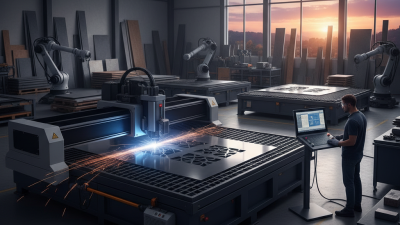
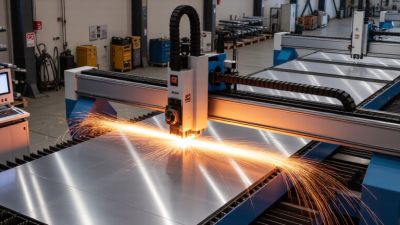
Choosing a metalworking machine starts with the material, thickness, and required finish. A fiber laser cuts sheet metal quickly, with narrow kerfs and limited heat distortion. Plasma machines handle thicker steel efficiently, but they may leave more edge residue. Waterjet cutting suits heat-sensitive alloys and produces clean edges, although operating costs can rise. For accurate bends, a CNC press brake offers repeatable angles and programmable pressure.

Capabilities should match real production demands, not impressive brochures. Check cutting thickness, working area, tolerance, cycle time, and maximum load. Milling machines suit detailed parts and rigid materials, while lathes perform better on shafts and round components. Ask for sample testing using your actual metal. Small differences in hardness can change tool wear and surface quality.

Operating methods also affect the final choice. Automated loading improves consistency, but skilled setup remains essential. Operators must inspect nozzle alignment, tooling condition, coolant flow, and clamp pressure. Measure twice. Fit matters. A poorly supported sheet can vibrate, causing rough edges or inaccurate bends. I once underestimated setup time on a short production run, and the machine stood idle longer than expected. That mistake changed my evaluation method: include programming, cleaning, maintenance, and operator training in the total cost. The cheapest machine may not be the most practical one.

How to Choose the Best Metal Works Machine? - Compare Machine Types, Capabilities, and Operating Methods

Machine Type Operating Method Typical Materials Typical Cutting or Forming Range Typical Accuracy Main Capabilities Key Advantages Important Limitations Best-Suited Applications
Fiber Laser Cutter A focused fiber laser beam melts or vaporizes material while assist gas removes molten metal. Mild steel, stainless steel, aluminum, brass, copper, and some coated metals. Usually thin to medium sheet and plate; practical capacity depends on laser power, material, and thickness. Commonly about ±0.05–0.15 mm under suitable production conditions. High-speed 2D cutting, small holes, detailed profiles, and automated nesting. Excellent edge quality, narrow kerf, high repeatability, low mechanical force, and efficient material utilization. Higher initial cost; reflective metals require suitable settings; thick sections may cut more slowly. Precision sheet-metal parts, electrical enclosures, brackets, furniture, and general fabrication.
CO₂ Laser Cutter A gas laser generates a focused beam for thermal cutting, normally with oxygen or nitrogen assist gas. Mild steel, stainless steel, aluminum, and selected non-metallic materials with appropriate equipment. Thin to medium sheet and plate, depending on rated power and material type. Commonly about ±0.05–0.15 mm under controlled conditions. Detailed contour cutting, marking, and production of intricate profiles. Good cut quality and proven performance for many conventional sheet-metal operations. Generally higher energy use and maintenance requirements than modern fiber laser systems. Existing laser-production lines, detailed sheet parts, and mixed fabrication work.
CNC Plasma Cutter An electric arc ionizes gas into a high-temperature plasma jet that melts and ejects conductive metal. Mild steel, stainless steel, aluminum, and other electrically conductive metals. Typically medium to thick plate; capacity varies considerably with plasma power and torch design. Often about ±0.2–0.5 mm for standard production cutting. CNC profiling, bevel cutting with suitable torches, and efficient plate processing. High cutting speed, lower equipment cost than many laser systems, and strong thick-plate performance. Wider kerf and larger heat-affected zone than laser; produces noise, fumes, and consumable wear. Structural components, machinery parts, frames, base plates, and medium-volume plate fabrication.
Waterjet Cutter A high-pressure water stream, often mixed with abrasive garnet, erodes the material without significant thermal input. Steel, stainless steel, aluminum, copper, titanium, stone, glass, composites, and other hard materials. Thin sheet through very thick plate; practical thickness depends on pump pressure, nozzle, and material. Commonly about ±0.08–0.25 mm, depending on machine class and cutting speed. Cold cutting, complex profiles, stacked-sheet cutting, and processing of heat-sensitive materials. No heat-affected zone, minimal thermal distortion, and broad material compatibility. Slower than laser or plasma for many jobs; abrasive and water-management costs can be significant. Aerospace parts, tooling, thick precision plates, composites, and heat-sensitive components.
Oxy-Fuel Cutter A fuel-gas flame preheats the steel, and a stream of oxygen oxidizes and removes the material. Primarily carbon steel; generally unsuitable for stainless steel and aluminum without specialized processes. Best for medium to very thick carbon-steel plate. Often about ±0.5–1.5 mm, influenced by plate thickness, setup, and operator control. Straight and shaped cuts in heavy plate, including large structural sections. Low equipment cost, deep cutting capability, and straightforward field or workshop operation. Large heat-affected zone, slower production, more distortion, and limited material range. Heavy fabrication, structural steel, shipbuilding, repair work, and large carbon-steel parts.
CNC Press Brake A powered punch and die apply controlled force to bend sheet or plate along programmed lines. Mild steel, stainless steel, aluminum, and other ductile sheet materials. Commonly used for sheet and plate bending; capacity is determined by machine tonnage, bed length, and tooling. Typical bend-angle repeatability is about ±0.25–0.75° with proper setup and material control. Air bending, bottoming, coining, multi-bend sequences, and automated back-gauge positioning. Flexible part forming, repeatable angles, and efficient production of boxes, channels, and brackets. Requires suitable tooling and careful setup; springback and material variation affect final angles. Enclosures, cabinets, frames, channels, brackets, and fabricated sheet-metal assemblies.
CNC Turret Punch Press Programmable punching tools strike the sheet to create holes, slots, notches, and formed features. Mild steel, stainless steel, aluminum, and other punchable sheet materials. Usually thin to medium sheet; thickness depends on rated punching force and tooling clearance. Often about ±0.05–0.15 mm for positioning under suitable production conditions. High-volume hole patterns, louvers, tabs, embosses, nibbling, and sheet marking. Fast repetitive punching, broad tooling options, and efficient processing of perforated parts. Creates tool marks and noise; tooling investment and setup are less attractive for low-volume custom profiles. Electrical panels, ventilation parts, server cabinets, brackets, and perforated sheet products.
CNC Shearing Machine Upper and lower blades apply a controlled shearing force to produce straight cuts. Mild steel, stainless steel, aluminum, and other sheet materials within the machine rating. Best for straight cuts in sheet and plate; thickness depends on blade length and machine capacity. Typically about ±0.1–0.5 mm for programmed back-gauge positioning. High-speed straight-line cutting, blank preparation, and repeatable rectangular sizing. Simple operation, low heat input, fast cycle times, and relatively low operating cost. Limited to straight cuts; blade clearance and alignment must be adjusted for different materials. Blanking, strip cutting, fabrication preparation, and high-volume rectangular sheet work.
Selection note: Choose the machine according to material type, maximum thickness, required tolerance, part geometry, production volume, available utilities, operator skill, ventilation requirements, and total operating cost. Actual performance varies with machine configuration, tooling, material condition, programming, and maintenance.

Evaluate Precision, Power, Speed, and Production Capacity

How to Choose the Best Metal Works Machine?

Evaluate precision, power, speed, and production capacity before comparing prices. A machine that cuts quickly may still create costly rework if thermal drift affects hole position. Check its repeatability, positioning accuracy, and performance after several hours of operation. ISO 230-2 provides a recognized method for testing positioning accuracy and repeatability. Ask for test records, not only catalog figures.

Power must match the material, tooling, and cutting depth. Stainless steel, hardened steel, and aluminum place different demands on the spindle and drive system. Review continuous power, peak torque, spindle speed, and chip-removal performance together. Speed alone can mislead. A fast machine with weak rigidity may produce vibration marks on a 600-millimeter plate. That is not real productivity.

Production capacity depends on uptime, loading time, maintenance access, and automation readiness. The International Federation of Robotics reported 4,281,585 industrial robots operating worldwide in 2023, a 10% increase from the previous year. This growth shows how manufacturers value repeatable material handling and stable cycle times. Deloitte’s 2024 Smart Manufacturing and Operations Survey found that 86% of manufacturers view smart manufacturing as important for competitiveness. Still, automation is not always the answer. I would calculate actual parts per hour using setup, inspection, and operator movement. Many estimates look impressive on paper. The shop floor is less forgiving.

Check Safety Features, Maintenance Needs, and Operator Training

Choosing a metal works machine starts with the safety features operators will use every day. OSHA’s FY2023 enforcement data listed machine guarding among its ten most-cited standards, with more than 1,600 citations. That figure deserves attention. Check fixed guards, interlocked doors, emergency stops, and clearly marked isolation points. Test the stop button with the machine empty, not during a rushed production run. A guard that slows every setup may be removed by frustrated workers. That is a design warning, not a worker failure.

Maintenance needs should be visible before purchase. Ask how often blades, belts, hydraulic lines, sensors, and filters require inspection. Review the manufacturer’s maintenance schedule, spare-part access, and lockout procedures. OSHA identifies control of hazardous energy as a major enforcement concern, so isolation points should be reachable and labeled. A clean service panel matters. So does a simple checklist. In practice, complicated maintenance is often skipped, although teams may deny it.

Operator training must cover setup, material handling, jam clearing, cleaning, and abnormal noise. The National Safety Council reported that preventable workplace deaths cost the United States $167 billion in 2022, including wages, medical expenses, and productivity losses. Do not rely on a single classroom session. Use supervised practice with sample metal pieces, then verify skills through observation. Even experienced operators need refreshers after machine changes or long absences. Training records are useful, but they do not prove competence. Watch the work.

How to Choose the Best Metal Works Machine?

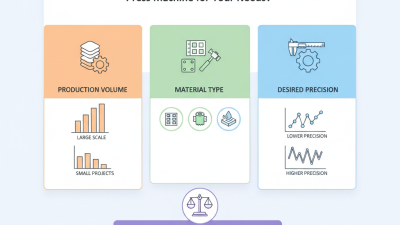
Compare the three selection factors that most directly affect machine safety, uptime, and operating performance. Always verify the final choice against the manufacturer’s manual, applicable regulations, and a workplace risk assessment.

How to read this chart: Safety features should be checked first, including guarding, emergency stops, and interlocks. Maintenance needs should cover lubrication, tooling checks, cleaning, inspection, and access to replacement parts. Operator training should include machine controls, safe work procedures, personal protective equipment, emergency response, and lockout/tagout practices. The scores are practical evaluation weights for comparing machines, not manufacturer performance ratings.

Calculate Total Costs and Select the Right Machine for Your Shop

How to Choose the Best Metal Works Machine?

Before comparing machines, calculate the total cost over five years, not only the purchase price. Include delivery, installation, electrical upgrades, tooling, software, training, maintenance, energy, and financing. Ask the supplier for service intervals and realistic part costs. Then estimate lost production during repairs. My early estimates were too optimistic because I ignored setup time between jobs. That mistake changed the payback calculation. Numbers expose that gap.

Match capacity to your actual work. Measure your common material thickness, sheet size, tolerances, and weekly production hours. A machine with excessive capacity may consume more power and floor space without improving output. An undersized machine creates bottlenecks, rushed setups, and overtime. Compare cycle time using your own parts, not a demonstration piece. Request documented accuracy ranges, safety functions, operator requirements, and maintenance access. Small details matter. Can one operator load it safely? Can your electrical system support it?

Build a simple cost-per-part model. Divide annual ownership costs by expected good parts, then add labor, consumables, scrap, and downtime. Use conservative production estimates. Include training days and a backup plan for critical repairs. Speak with technicians and operators who use comparable equipment daily. Their practical comments often reveal awkward controls, difficult cleaning, or frequent alignment checks. Verify claims through manuals, service records, and written quotations. A cheaper machine can become costly when reliability is uncertain. Recheck every assumption before signing.