Finding a superior quality machine in 2026 requires more than comparing prices or polished specifications. Buyers must examine measurable performance, service history, safety controls, and long-term operating costs. The best machine should feel predictable on a busy factory floor, even after thousands of operating hours.
The International Federation of Robotics reported 541,302 industrial robot installations worldwide in 2023. Its World Robotics 2024 report also recorded more than 4.28 million operational industrial robots. These figures show a highly competitive market, but growth does not guarantee quality. A cheaper machine may consume more energy, require frequent calibration, or create hidden downtime. Deloitte’s 2024 Smart Manufacturing and Operations Survey found that 86% of manufacturers expect smart manufacturing to become a major competitiveness driver within three years. That expectation raises the standard for connected, traceable, and maintainable equipment.
Quality pioneer Joseph M. Juran stated, “Quality does not happen by accident. It must be planned.” His principle remains practical when assessing a modern machine. Ask for documented accuracy tests, component origins, maintenance intervals, cybersecurity protections, and verified customer results. Look closely. Is the control panel clear under factory lighting? Can technicians replace a worn part without dismantling half the system? These details matter.
No machine is perfect. Even strong suppliers can overstate benefits. Buyers should challenge impressive claims and request independent evidence. A superior quality machine is not simply powerful or expensive. It is a dependable asset whose performance remains measurable, support remains available, and weaknesses are honestly understood.
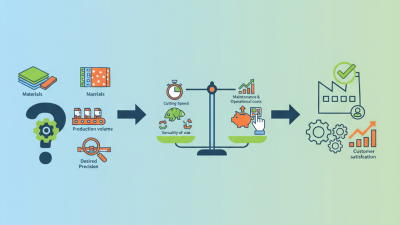
A superior machine begins with a precise job description. Define the material, operating environment, cycle time, load, tolerance, and operator contact. A cutting machine for thin aluminum needs different power and accuracy than one handling hardened steel. The International Federation of Robotics reported 541,302 industrial robots were installed worldwide in 2023. That growth shows rising automation demand, but more automation does not guarantee a suitable machine.
Translate your needs into measurable targets. Specify output per hour, repeatability, energy use, noise, maintenance intervals, and acceptable downtime. The U.S. Department of Energy states that motor-driven systems can consume more than half of industrial electricity. Therefore, efficiency deserves attention before purchase, not after installation. Check safety functions against ISO 12100 and IEC 60204-1. Request performance tests using your actual material and operating cycle. A showroom demonstration may look perfect. Real production is less forgiving. I have seen small temperature changes affect accuracy, and this detail is easy to overlook.
Tips: Record your current process for one week. Measure actual cycle times, rejected pieces, energy use, and stoppages. Ask for test data under comparable loads. Inspect access panels, controls, guarding, and spare-part availability. Leave room for honest uncertainty. Your first specification may be wrong. Recheck it with operators and maintenance staff before signing.
Finding a superior machine in 2026 begins with measurable quality standards, not impressive photographs. Define acceptable tolerances, production capacity, operating temperature, noise level, and service life. Ask how each figure was tested. A supplier’s answer should include test methods, records, and responsible personnel. “High quality” is too vague. Be cautious. In my equipment evaluations, a clear inspection sheet often reveals more than a polished demonstration. Still, even a good checklist can miss actual shop-floor behavior.
Write specifications before comparing quotations. State materials, dimensions, power requirements, cycle time, control accuracy, and maintenance access. Include the worst expected workload, not only normal conditions. Request sample outputs from conditions similar to yours. Measure consistency across several runs. One successful sample proves little.
Check calibration certificates, component traceability, software update procedures, and spare-part availability. Independent testing can strengthen confidence when claims seem unusually precise. I have learned that unclear units create expensive misunderstandings. Metric and imperial values should never be assumed interchangeable.
Safety requirements must be practical and documented.
Look for guards, emergency stops, interlocks, warning labels, safe access points, and clear lockout procedures. Review applicable regulations in the machine’s installation location. Require risk assessments, operator instructions, and training records before commissioning. Ask who verifies protective functions after maintenance. A machine may meet a standard on paper yet feel unsafe during cleaning. That uncomfortable observation deserves attention. Leave room for human error, because operators do not work like laboratory instruments. Quality becomes credible through repeatable results, transparent evidence, and safe daily use.
How to Find a Superior Quality Machine in 2026?
Compare Materials, Manufacturing Methods, and Component Reliability
A superior machine begins with material evidence, not polished photographs. Check the alloy grade, heat treatment, hardness range, and corrosion resistance. For load-bearing frames, inspect weld penetration and dimensional stability after machining. Poorly controlled heat can create hidden distortion. The U.S. Department of Energy reports that motor-driven equipment uses about 69% of industrial electricity in the United States. Therefore, motor efficiency and thermal management deserve serious attention. A stronger frame cannot compensate for an inefficient drive system.
Manufacturing methods reveal long-term quality. Ask whether critical parts receive CNC inspection, surface measurement, and documented process control. Review tolerance records, not only final inspection claims. Deloitte’s 2024 Smart Manufacturing and Operations Survey found that 92% of manufacturers see smart manufacturing as important for future competitiveness. That trend supports traceable production data, but software cannot repair weak engineering. I have seen machines with impressive dashboards and disappointing bearings. Component reliability requires supplier test reports, lubrication specifications, seal quality, and realistic fatigue testing. Independent verification is still valuable.
Tips: Compare the same load rating across machines. Check vibration limits, bearing life calculations, spare-part availability, and service intervals. Request a sample inspection report. Test the machine under heat, dust, and uneven loading when possible. Do not trust a low price too quickly. It may reflect thinner materials or shorter validation. My own evaluation can still miss hidden defects, especially when records are incomplete. That uncertainty should be documented before purchase.
A reliable machine begins with a transparent supplier. Ask how long the supplier has built similar equipment. Request customer references from comparable industries. Review factory photos, production records, and service response times. A polished website proves little. Speak with an engineer, not only a salesperson. Confirm the supplier can explain maintenance intervals, expected output, and known limitations in plain language. Honest limitations often signal stronger technical judgment.
Certifications require careful checking. Verify the certificate number, issuing body, expiry date, and covered production site. The document must match the machine category and current model. ISO 9001 may show process control, but it does not guarantee perfect performance. Request electrical, material, and safety compliance records where applicable. During factory acceptance testing, define measurable targets for speed, accuracy, noise, and energy use. Ask to witness the test. Keep signed results with photographs and serial numbers. Test data matters.
Warranty support reveals the supplier’s real confidence. Read coverage for parts, labor, travel, software, and response times. Check which failures are excluded. Ask whether replacement parts remain available after several years. A practical service agreement should name communication channels and escalation steps. I once focused too heavily on purchase price. That decision ignored installation delays and training costs. A cheaper machine can become expensive when support is vague. Leave room for doubt, and ask uncomfortable questions before payment.
A high purchase price does not guarantee superior quality. Compare the machine’s total cost across its expected service life. Include energy use, installation, training, spare parts, software, and planned downtime. The U.S. Department of Energy’s Operations & Maintenance Best Practices Guide reports that predictive maintenance can reduce costs by 8–12% compared with preventive maintenance. Savings may reach 30–40% compared with reactive repairs. These figures are useful, but your factory conditions may differ.
Ask for maintenance records, failure histories, and realistic service intervals. A machine requiring frequent specialist visits can become expensive in a remote facility. Check whether technicians can inspect bearings, belts, seals, and control systems without long shutdowns. Small access panels matter. So does documentation.
Long-term value also depends on usable life and upgrade potential. McKinsey analysis indicates predictive maintenance can reduce downtime by 30–50% and extend machine life by 20–40%. Treat these figures as benchmarks, not promises. I would test the machine under actual load before approval. A clean showroom demonstration proves little. One overlooked cost can damage the entire calculation. Use a five-year ownership model, then challenge every assumption. The cheapest forecast is often the least reliable.