China remains the world’s largest steelmaking nation, creating a deep base for seamless tube production. According to the World Steel Association’s World Steel in Figures 2024, China produced about 1.02 billion tonnes of crude steel in 2023. That represented more than half of global output. However, crude steel volume does not automatically prove tube-making quality. The distinction matters.
This guide examines China’s top seamless steel tube manufacturers through practical purchasing factors. These include production capacity, steel grades, outside diameter ranges, wall thickness control, heat treatment, and inspection systems. It also considers oil and gas, power generation, boilers, construction machinery, and automotive applications. Reports from the International Energy Agency and the International Association of Oil & Gas Producers continue to show strong demand for reliable tubular products in energy infrastructure. Yet demand varies by region and project cycle.
Evidence matters most.
The selected companies are assessed through public certifications, product catalogs, export experience, mill capabilities, and available project references. Relevant standards may include ASTM, ASME, EN, DIN, API, and ISO requirements. Some manufacturers specialize in small precision tubes, while others focus on large-diameter structural or pressure-service products. Buyers should verify current certificates directly, because product ranges and ownership structures can change. No ranking is perfect. Public information can be incomplete, and supplier claims still require independent review. In practice, a strong factory is not always the best fit for every order. This overview aims to make that comparison clearer, more technical, and more useful for international buyers sourcing Seamless Steel Tube from China.
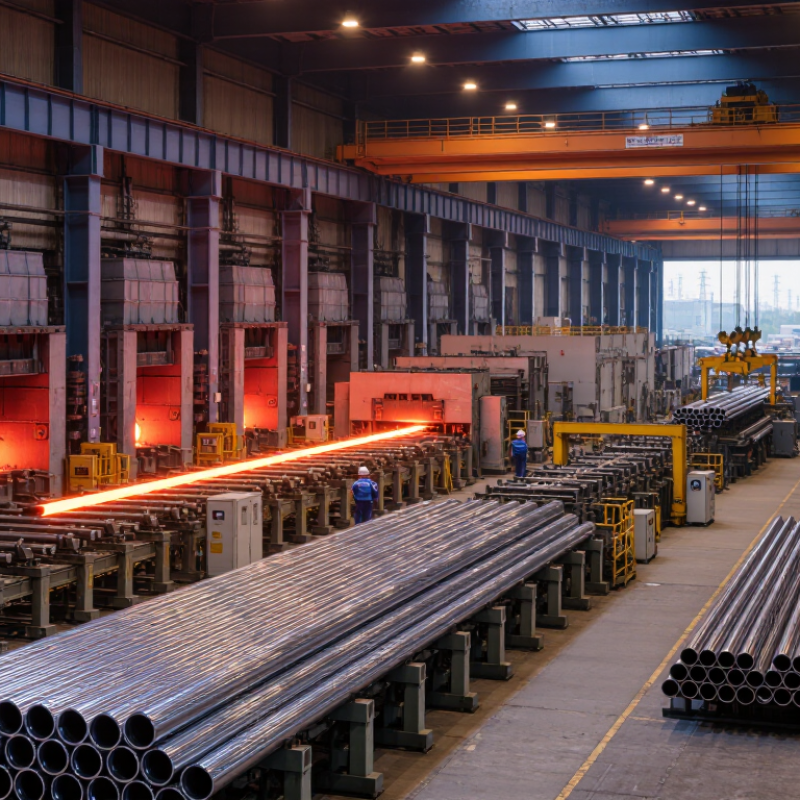
A leading seamless steel tube manufacturer is defined by evidence, not a polished ranking. Buyers should examine production experience, engineering capability, and quality records. Reliable manufacturers control melting, piercing, heat treatment, sizing, and finishing in documented stages. Their tubes should show stable wall thickness, accurate outside diameter, and clean internal surfaces. These details matter in boilers, pressure systems, energy projects, and structural applications.
Technical credibility also depends on traceability. Each batch should connect to heat numbers, inspection reports, chemical analysis, and mechanical test results. Independent testing can verify tensile strength, hardness, impact performance, and nondestructive examination. A professional supplier understands relevant specifications, including ASTM, EN, or project-specific requirements. However, certificates alone are not enough. Factory audits, sample testing, and production communication reveal more. Mistakes still happen, even in experienced facilities. The important question is how openly they correct them.
Tips: Request recent inspection records and confirm their issuing laboratory. Compare sample dimensions with the written tolerance. Ask how rejected tubes are separated and recorded. Check whether production schedules remain realistic during large orders. A dependable manufacturer explains limitations instead of promising everything. Visit the facility when possible. Look closely at storage conditions, marking quality, and loading protection. Small signs often expose weak process control.
Ranking China’s top seamless steel tube manufacturers requires more than production volume. The strongest evaluation begins with verified experience in demanding applications, such as boiler lines, energy equipment, and structural projects. Years in operation matter, but documented project performance matters more. Reviewers should examine factory records, process flow, and the technical team’s qualifications. A polished website is not evidence.
Quality control deserves the greatest weight. Inspectors should check melting records, heat numbers, dimensional reports, hydrostatic testing, and non-destructive inspection results. Consistent wall thickness is critical when tubes face pressure or high temperatures. Accredited laboratories and traceable certificates improve confidence. A useful ranking also compares applicable standards, sampling methods, and how quickly the manufacturer handles a failed batch. Small details reveal discipline.
Manufacturing capacity must be measured carefully. A large annual output can hide uneven quality, subcontracting, or delayed delivery. Assess available steel grades, outside diameters, heat-treatment equipment, finishing lines, and realistic lead times. Export experience should include secure packaging, accurate documents, and knowledge of destination requirements. Customer references, repeat orders, and transparent corrective-action reports add authority. No ranking is perfect. Market data changes, and some records remain difficult to verify. That limitation should be stated rather than concealed. Price can support comparison, but it should never outweigh safety evidence, technical reliability, and communication during production.
| No. | Ranking Criterion | Weight | Measurable Indicators | Recommended Verification Evidence |
|---|---|---|---|---|
| 1 | Manufacturing Capacity | 15% | Annual seamless-tube output, number of production lines, billet-piercing capacity, and ability to support repeat orders. | Audited production records, equipment list, factory inspection reports, and documented delivery performance for comparable orders. |
| 2 | Product Range | 12% | Coverage of carbon steel, alloy steel, stainless steel, structural, boiler, heat-exchanger, line-pipe, and mechanical tubes. | Current product catalogue, technical datasheets, available outside diameters, wall thicknesses, steel grades, and manufacturing processes. |
| 3 | Standards Compliance | 15% | Conformity with applicable standards such as ASTM, ASME, API, EN, DIN, JIS, GB/T, and ISO requirements. | Valid certificates, third-party inspection reports, heat-number traceability, mill test certificates, and standard-specific test records. |
| 4 | Quality Control System | 13% | Control of raw materials, heat treatment, dimensional accuracy, surface quality, non-destructive testing, and final inspection. | ISO 9001 certification, quality manuals, inspection and test plans, calibration records, internal audit results, and nonconformance procedures. |
| 5 | Testing Capability | 10% | Tensile, hardness, flattening, flaring, hydrostatic, ultrasonic, eddy-current, chemical-analysis, and impact testing where specified. | Laboratory accreditation, test equipment calibration certificates, sample test reports, and documented testing procedures. |
| 6 | Dimensional Accuracy | 8% | Control of outside diameter, wall thickness, length, straightness, ovality, and end condition within the ordered specification. | Dimensional inspection reports, gauge calibration records, tolerance data, and random inspection results from completed shipments. |
| 7 | Export Experience | 8% | Experience with international documentation, export packing, customs procedures, destination-country requirements, and overseas logistics. | Redacted shipping records, export compliance documents, packing specifications, customer references, and inspection certificates. |
| 8 | Industry Applications | 7% | Proven supply capability for oil and gas, power generation, petrochemical, construction, machinery, automotive, and water infrastructure projects. | Project references, application-specific approvals, technical case studies, and records demonstrating suitability for the required service conditions. |
| 9 | Delivery Reliability | 7% | On-time delivery rate, production lead time, stock availability, order tracking, and responsiveness to schedule changes. | Historical delivery statistics, production schedules, logistics records, order-status procedures, and verified customer feedback. |
| 10 | Commercial Value and Service | 5% | Total cost of ownership, quotation transparency, minimum order requirements, technical support, warranty terms, and after-sales response. | Itemized quotations, payment terms, technical support records, warranty policy, complaint-resolution data, and post-delivery service procedures. |
China’s seamless steel tube sector includes mills with different strengths, equipment, and service models. A useful profile looks beyond production volume. It checks steel grades, dimensional tolerances, inspection records, and delivery consistency. Details matter: a tube’s wall thickness can affect how it performs under pressure.
Among leading producers, some focus on large-diameter tubes for energy and infrastructure projects. Others specialize in precision tubes for machinery, automotive parts, or hydraulic systems.
Several operate integrated facilities, from steelmaking to finishing. Others depend on external billet suppliers, which can shape lead times. Some offer heat treatment and non-destructive testing in-house; others may arrange these services through partners. Not every mill serves every application well.
The remaining profiles differ in export experience, product range, and customization. Some are better suited to repeat orders with stable specifications. Others may handle unusual sizes, though buyers should confirm production limits directly. Ask for recent test certificates, sample inspection results, and clear tolerances. Check whether stated capacity reflects available output, not just installed equipment. A ranked list can be a starting point, not proof of quality. Even capable suppliers may have uneven documentation or communication; that deserves scrutiny.
When comparing China’s top seamless steel tube manufacturers, look beyond product names and headline capacity. Product ranges may include carbon steel, alloy steel, and stainless steel tubes in different diameters, wall thicknesses, and lengths. Some suppliers focus on standard sizes, while others offer custom dimensions or heat-treated options. Details matter.
Quality standards should match the tube’s intended service. Buyers can check applicable specifications, such as ASTM, API, or EN requirements, and confirm the exact grade and tolerance in writing. Ask how each batch is inspected: common checks include chemical analysis, tensile testing, dimensional measurement, and ultrasonic examination. For pressure service, traceable test records are especially useful. Certificates alone are not enough.
Production capability is more than a large annual output figure. Review the available forming, heat-treatment, finishing, and testing equipment, then ask about lead times for the required size and quantity. A reliable supplier should explain how it controls wall thickness and surface condition, including how it handles rejected material. Request recent sample reports and clarify packaging before shipment. Small gaps in documentation can create real delays.
China Top 10 Seamless Steel Tube Manufacturers?
How to Evaluate and Select the Right Chinese Manufacturer
A supplier’s catalogue is only a starting point. Match its production capability to your actual tube requirements, including steel grade, outside diameter, wall thickness, length, and tolerance. Ask for current mill test certificates and confirm that heat numbers on documents match the products. Small details matter. A mismatch can delay inspection or installation.
Check how quality is controlled, not just whether a supplier claims certification. Ask about chemical analysis, mechanical testing, non-destructive examination, and how defects are recorded. Request sample inspection reports, then verify key measurements independently where practical. A factory visit can show whether storage areas protect tubes from moisture and whether batches are clearly identified. Photos help, but they cannot replace a proper audit. I would not treat a polished video as proof.
Compare quotations on equal terms: material specification, inspection scope, packaging, delivery point, and lead time. Clarify who handles third-party inspection and how production changes are approved. Ask for references involving similar tube dimensions or applications, while respecting confidentiality. Communication is also evidence. Do technical answers arrive clearly, with drawings or data when needed? Some buyers focus too much on the lowest price; I have seen that create more questions than savings. Check details before committing.
